
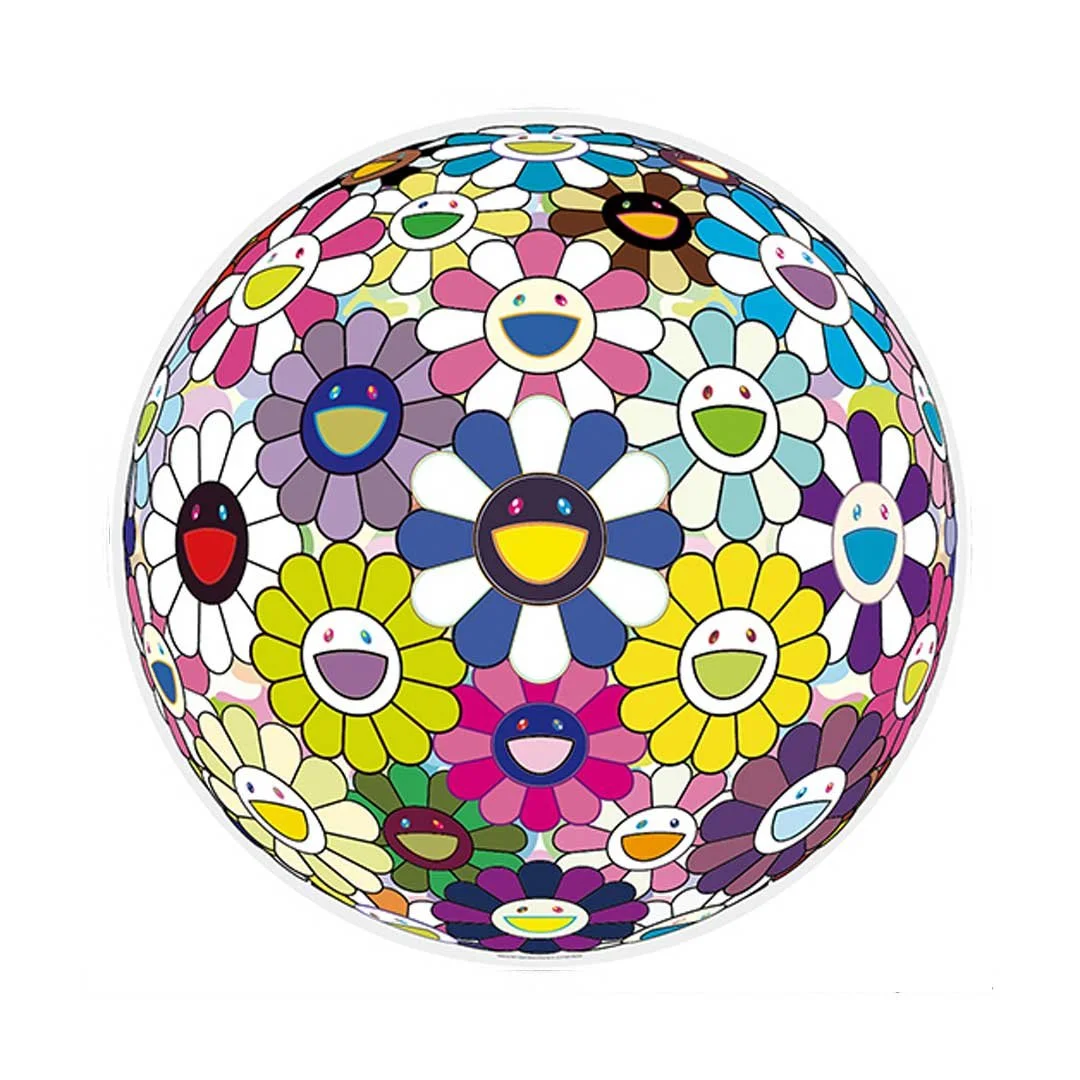
A Flower Ball is a round Takashi Murakami print in which dozens of smiling flowers are packed into a sphere that seems to swell out of the sheet. It is the image most people picture when they hear “Murakami print”, and the one most collectors buy first.
This guide explains where the Flower Ball comes from, how the editions are made, which ones to know and how to choose between them. It is written by a dealer who sources these prints in Japan and ships them worldwide, so it stays close to what you can check on the sheet itself.
From the smiling flower to the Flower Ball
The flower came before the ball. Murakami trained in nihonga, the Japanese painting tradition in which flowers are a core subject, and the smiling flower entered his work in the mid-1990s. It soon became his signature: a ring of rounded petals around a face, repeated in every colour.
In 2000 he gave his approach a name, Superflat: the idea that Japanese image-making, from Edo-period screens to anime, lives on a single flat plane with no depth and no hierarchy between high art and popular culture. Our Murakami glossary covers the term in more detail.
The Flower Ball is a deliberate contradiction of that idea. Every flower is still drawn flat, with a clean outline and no shading. But the flowers shrink and tilt as they approach the edge, and the eye reads a globe. That is why the early editions carry “(3D)” in their titles. The design of the first of them, Flower Ball (3D), carries a 2002 copyright date.
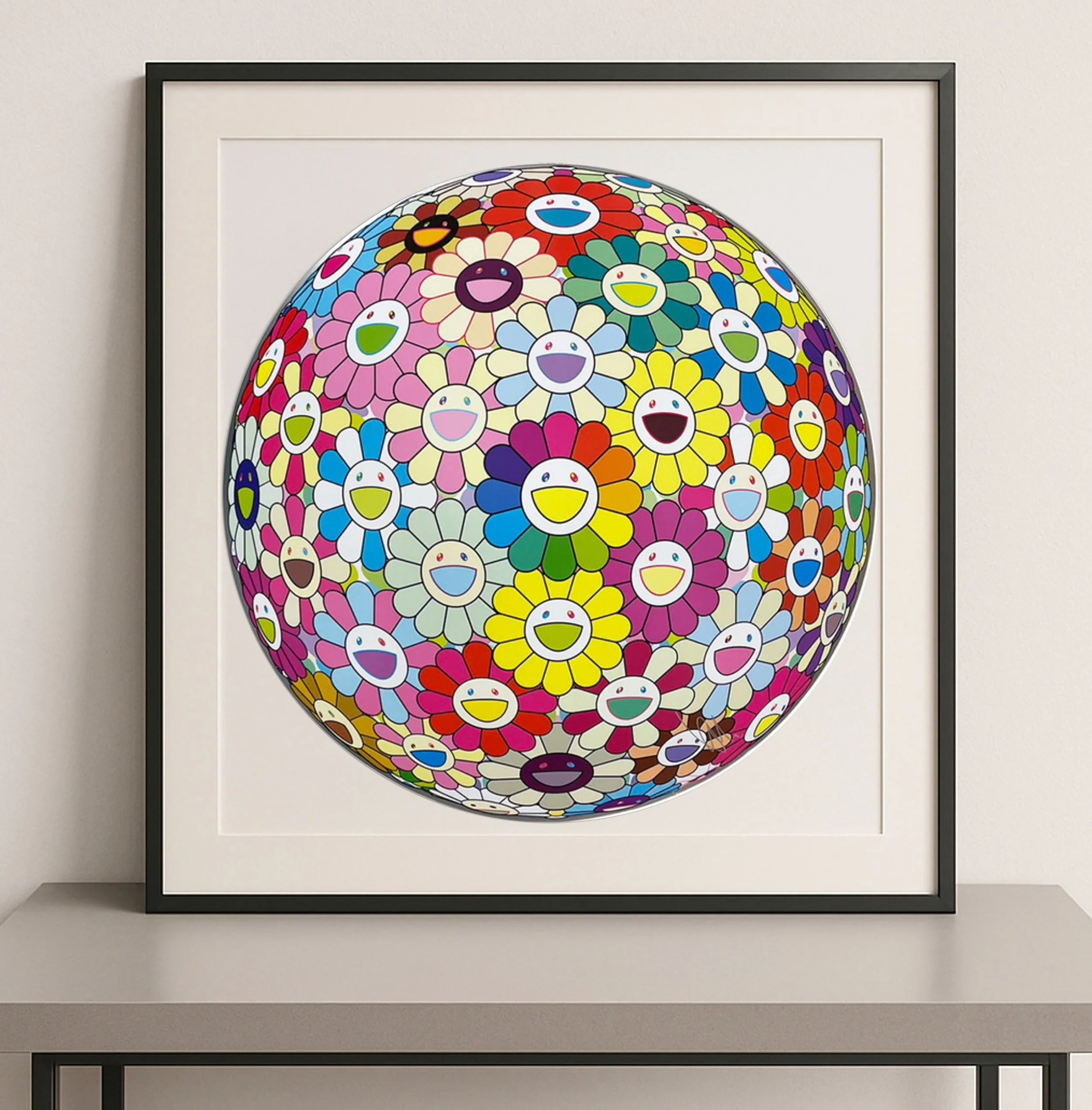
Takashi Murakami - Multiverse Flowers (2023)
How a Flower Ball print is made
A standard Flower Ball is a round sheet 71 cm in diameter, printed in offset and published by Kaikai Kiki in an edition of 300. The specification barely changes from one release to the next, which makes the prints easy to compare.
Format: round sheet, 71 cm (28 in) in diameter
Technique: four-colour offset with cold stamp and high-gloss varnish
Edition: 300 copies, plus a small number of proofs
Signature: signed and numbered by hand, lower right, often in silver ink
Publisher: Kaikai Kiki Co., Ltd., Tokyo
Packaging: original Kaikai Kiki box with a printed edition label
The cold stamp is a metallic foil pressed onto the sheet without heat. On a Flower Ball it often forms the ring around the sphere or the ground behind the flowers, and it is what makes the print flash when you walk past it. The varnish sits on top and gives the flowers their wet, candy-like surface. Our guide to the Korin prints describes both finishes step by step.
There are exceptions. A few Flower Balls were issued as silkscreens rather than offset prints, and at least one edition, Flower Ball: Festival Flower Decoration, is a smaller 46 cm sheet. Always read the technique and size of the specific edition before you compare prices.
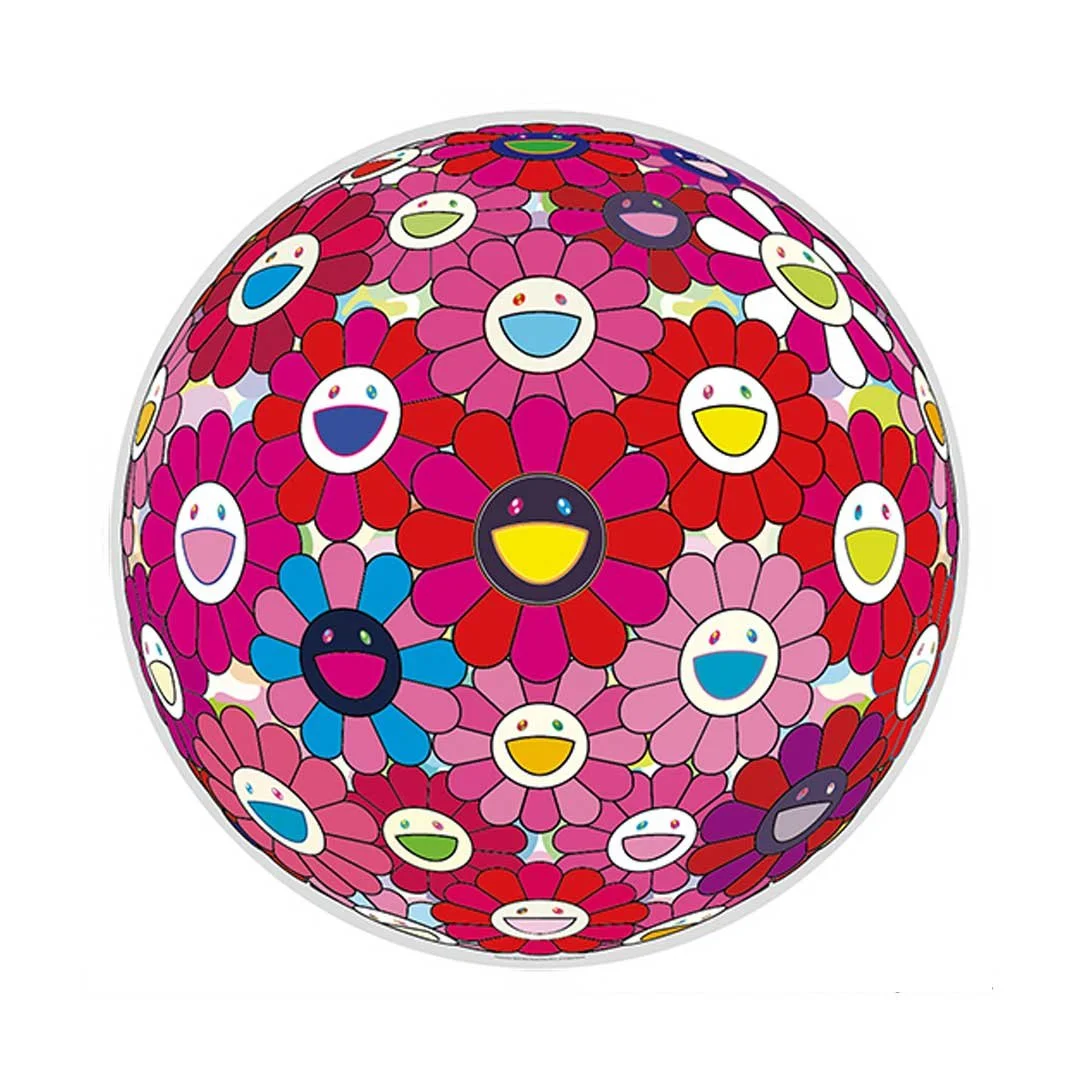
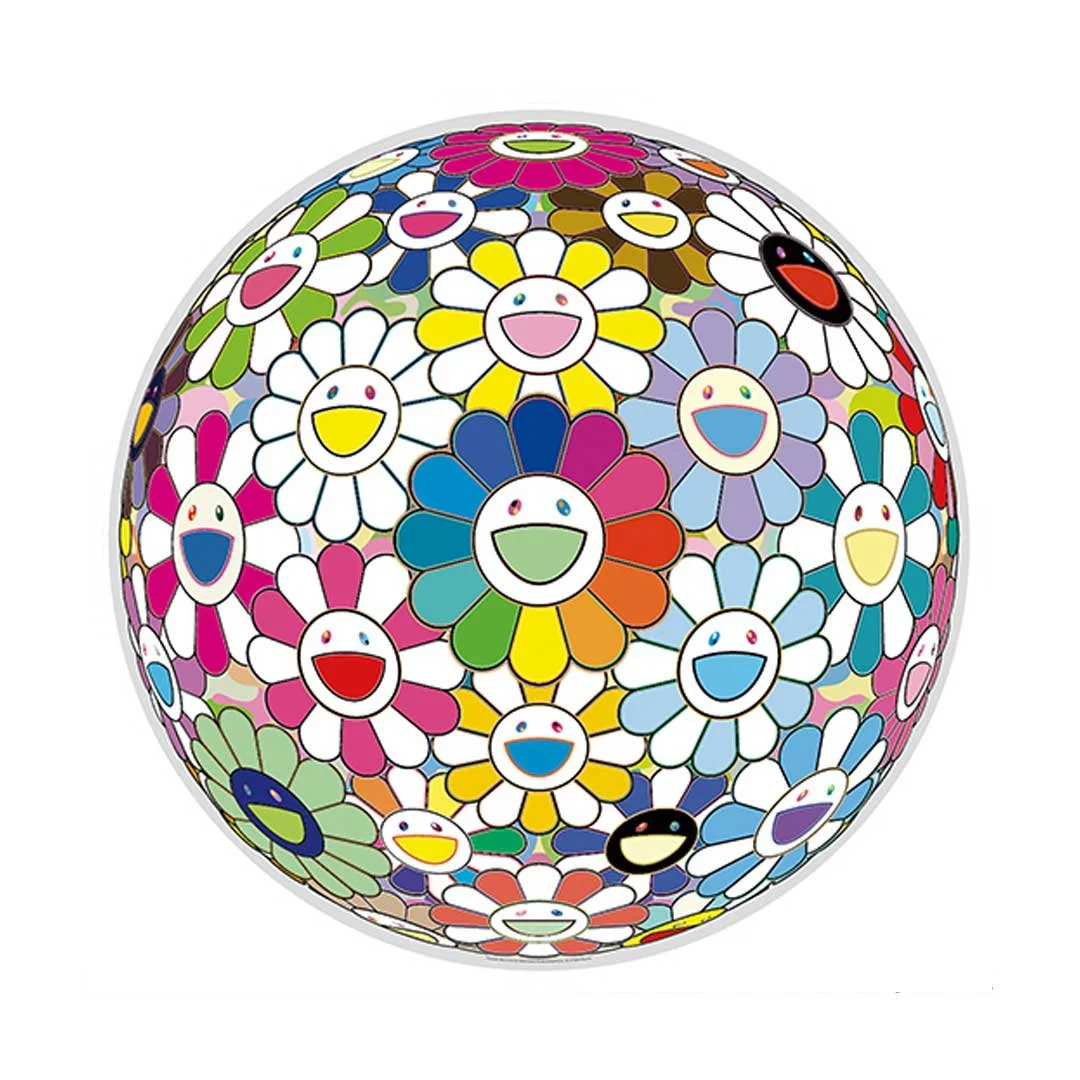
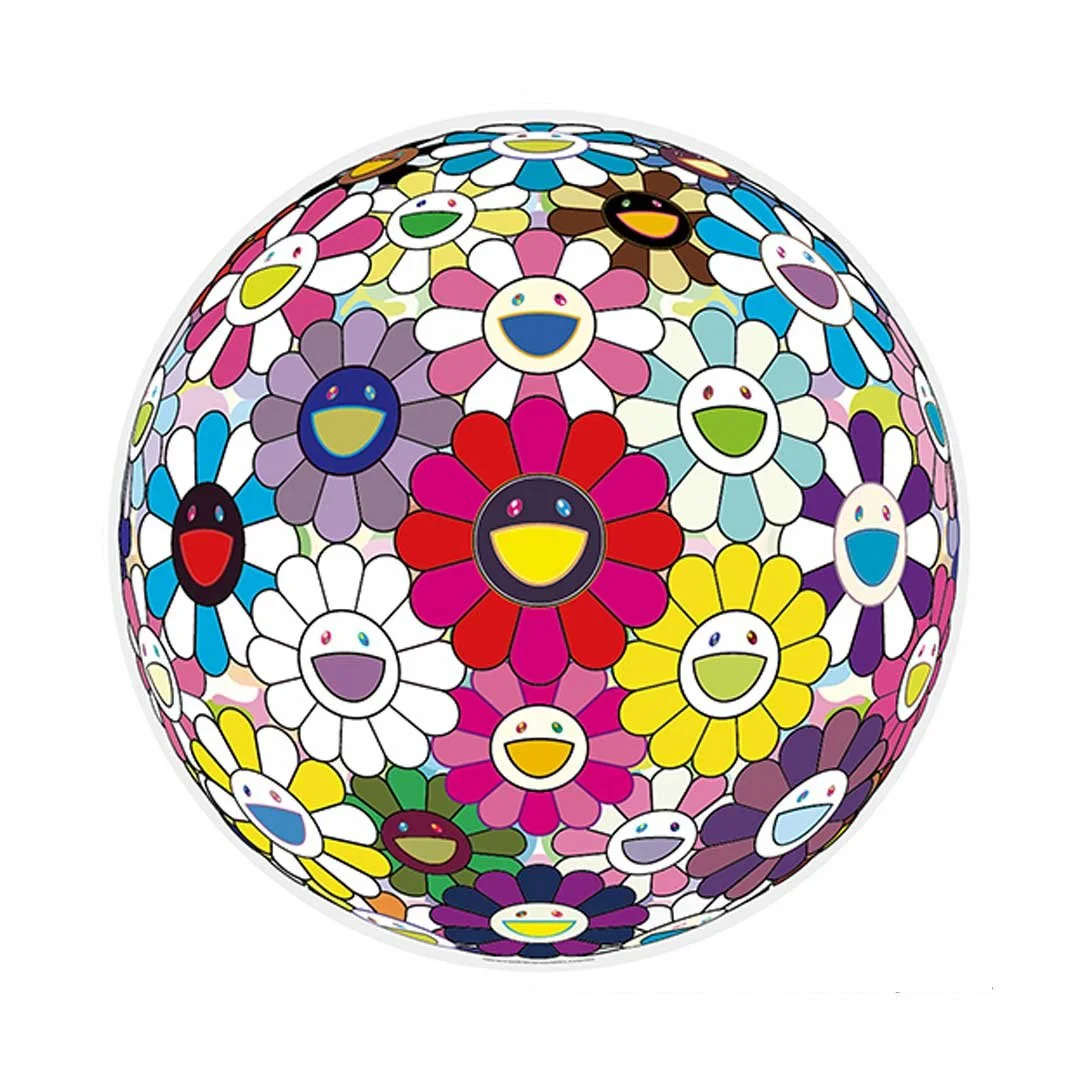
Key Flower Ball editions
More than thirty Flower Ball editions have been published since the early 2000s. They fall into three periods, and the title usually tells you which one you are looking at.
The 3D classics, 2002 to 2011. Flower Ball (3D), Flower Ball (3D) Autumn 2004, Flower Ball Pink, Flower Ball Blood (3D), Goldfish, Margaret, Red Cliff, Kindergarten, Sunflower and Cosmos. The original composition repeated in different colourways. These are the images that made the format famous and the ones most often seen at auction.
The named editions, 2013 to 2018. Sequoia Sempervirens, Papyrus, Multicolour, Open Your Hands Wide, Festival Flower Decoration and Burning Blood. Titles become more descriptive and the palettes more varied, from single-colour balls to full rainbow.
The recent releases, 2022 onwards. Flowerball: Colorful, Miracle, Sparkle, Fireball, Let Us Devote Our Hearts, Flowers of Gratitude, Inside the Rainbow’s Heart, Multiverse Flowers and Paradise in a Flower Field. Denser compositions and heavier use of foil. Many titles no longer contain the words “Flower Ball” at all.
A note on spelling. The series appears as both “Flower Ball” and “Flowerball”, sometimes on the same edition, and the two mean the same thing. When you search for a specific print, try both, and search by title as well: a 2022 edition such as Fireball is a Flower Ball in everything but name.
You can see the editions we currently hold in our Flowerball collection.
How to choose a Flower Ball
Because the format and the edition size are almost always the same, the choice comes down to five things.
Colour. This is the print you will look at every day. A multicolour ball reads as classic Murakami; a single-colour edition such as red or pink is calmer and easier to place in a room.
Period. The 3D classics carry the history of the series. The recent releases are easier to find in perfect condition and with complete packaging.
Condition. A round sheet has no corners to protect it, so check the edge all the way round for dents and soft creases. Tilt the print under a light: the varnish should be free of scratches and fingerprints, the foil crisp.
Completeness. A print that still has its original Kaikai Kiki box and edition label is easier to authenticate and easier to resell.
Source. Compare the print with the publisher’s official photographs before you pay. Our guide on how to spot a fake Murakami print sets out six checks anyone can do.
What a Flower Ball costs
At the time of writing, the 71 cm Flower Balls in our gallery are priced between €2,380 and €2,980, VAT included. Prices across the market vary with four factors.
The edition. Early 3D colourways and editions that sold out quickly at release tend to command more than recent ones.
Technique and size. Silkscreens and non-standard formats are priced on their own terms.
Condition. A dented edge or a scratched varnish takes a real share of the value, because the next buyer will see it too.
Completeness and provenance. Original box, label and a clear purchase history all support the price.
Two cautions. A Flower Ball offered far below the going rate is the most common sign of a fake. And a print is something to buy because you want to live with it: past prices say nothing certain about future ones.
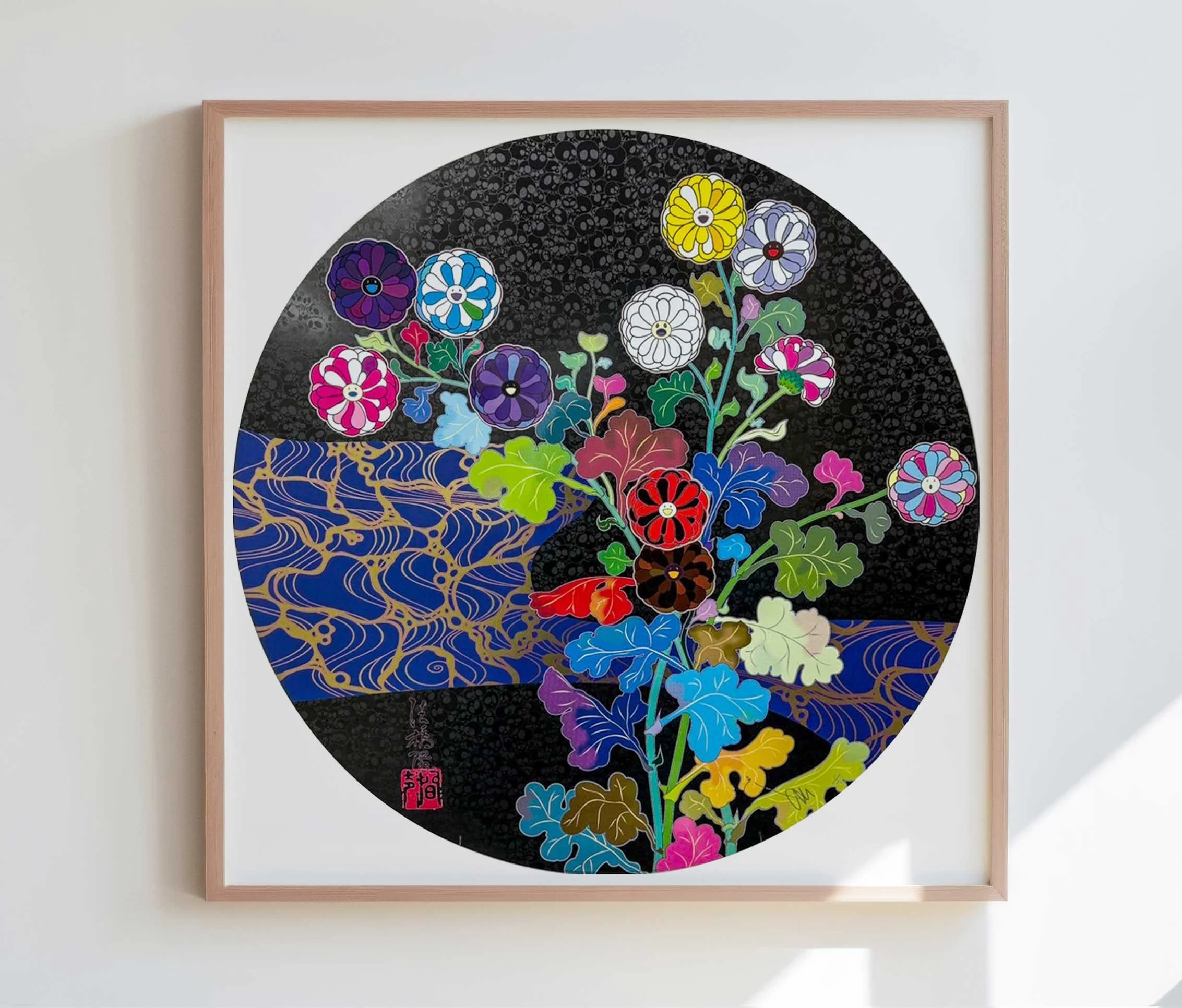
Takashi Murakami - Korin Kyoto Mononoke Flower
Framing and caring for a round print
We ship every Flower Ball unframed, flat, in its original Kaikai Kiki box. The box is part of the edition, and framing is a choice best made by the person who will live with the print.
There are two usual ways to frame a round sheet. A round frame follows the edge of the print and lets the ball stand alone on the wall. A square frame floats the sheet on a plain backing, which is simpler to make and easier to hang alongside other works. In both cases, ask your framer for the following.
UV-filtering glass or acrylic, to protect the colours.
Acid-free backing and hinges, so nothing stains the sheet over time.
A spacer between the glazing and the print, so the varnish never touches the glass.
No dry mounting, no trimming and no adhesive on the sheet. All three are irreversible.
Once it is on the wall, keep the print out of direct sunlight and away from damp rooms. Handle an unframed sheet by the edges with clean, dry hands or cotton gloves.
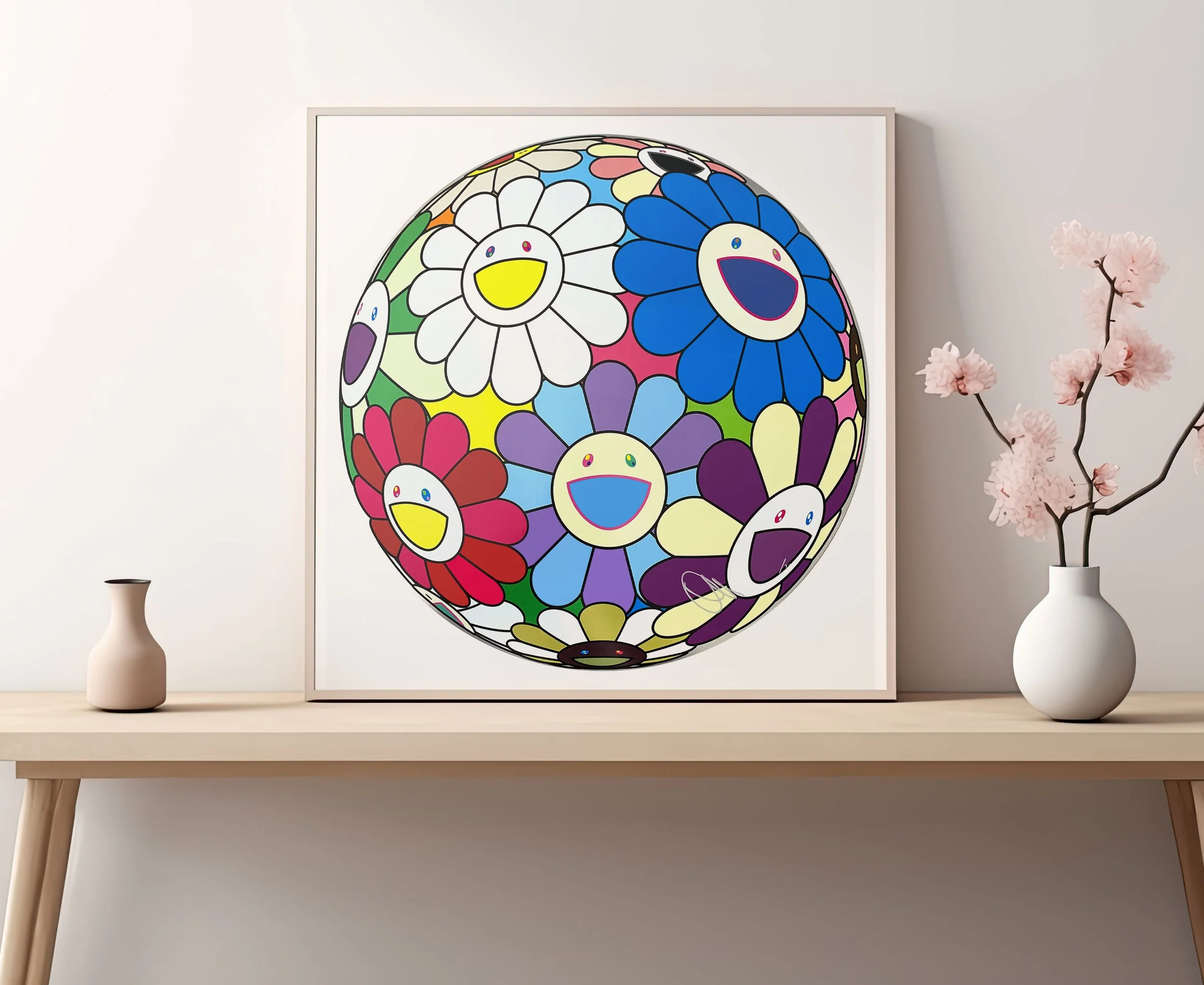
Takashi Murakami - Flower Ball: Festival Flower Decoration
Frequently asked questions
What is a Takashi Murakami Flower Ball? It is a round limited-edition print showing a sphere made of smiling flowers. The flowers are drawn flat but arranged so that the eye reads a three-dimensional ball. Murakami has published the format in many colourways since the early 2000s.
How big is a Flower Ball print? The standard sheet is round and 71 cm (28 in) in diameter. A few editions are smaller, so check the size of the specific title.
How many copies of each Flower Ball exist? Most editions are limited to 300 copies, each numbered by hand as a fraction such as 124/300, plus a small number of proofs outside the edition.
Are Flower Ball prints signed? Yes. Every copy in the edition is signed and numbered by hand by Takashi Murakami, usually at the lower right of the sheet and often in silver ink.
Is “Flowerball” different from “Flower Ball”? No. Both spellings are used for the same series, and several recent editions drop the words from the title altogether.
Does a Flower Ball come with a certificate of authenticity? Kaikai Kiki does not issue certificates for its print editions. Authenticity rests on the hand signature, the numbering, the finish and the original box. Miura Gallery issues its own certificate with every print it sells, as the gallery’s guarantee.
How much does a Murakami Flower Ball cost? At the time of writing, the 71 cm editions in our gallery range from €2,380 to €2,980, VAT included. Rarer editions and silkscreens can cost more.
Find your Flower Ball
Every Flower Ball we offer is hand-signed, numbered, checked against the publisher’s records and shipped insured worldwide in its original box. Browse the Flowerball collection, or write to us if you are looking for a specific edition: we source in Japan every week.
For new arrivals before they reach the site, follow Miura Gallery on Instagram.
